What Separates Tiling That Lasts From Tiling That Lifts
Need it done, not just explained? Tiling and marble contractors in Beirut - Waterproofed first, measured and quoted in writing. WhatsApp us now
Tiling is the most visible trade in a renovation and the one most often judged by the wrong thing. People choose the tile carefully and the tiler casually. The tile is a shopping decision; the substrate underneath it is what determines whether the floor is still flat and sound in ten years.
- Preparation and substrate matter more than the tile you choose.
- Waterproofing goes under the tile, and it is never the place to save.
- Large-format tiles are unforgiving of an uneven screed.
- Grout and movement joints are what fail first when they are wrong.
Choosing the material
| Material | Suits | Things to know |
|---|---|---|
| Ceramic | Walls, low-traffic floors | Easy to cut and lay, softer surface, plenty of local supply |
| Porcelain | Floors, wet areas, high traffic | Dense and hard-wearing; large formats need experienced fitters and a flat base |
| Natural marble | Feature floors, stairs, bathroom surfaces | Beautiful and repairable by polishing; porous, so it needs sealing and care with acids |
| Granite | Thresholds, stairs, heavy-use surfaces | Extremely durable, harder to work, heavier |
| Large-format panels | Contemporary open spaces | Fewest joints, most demanding installation — the substrate has nowhere to hide |
| Anti-slip rated | Bathrooms, balconies, entrances | A safety specification, not a style. Worth insisting on in wet areas. |
The four mistakes that ruin tiling
- Skipping or shortcutting waterproofing
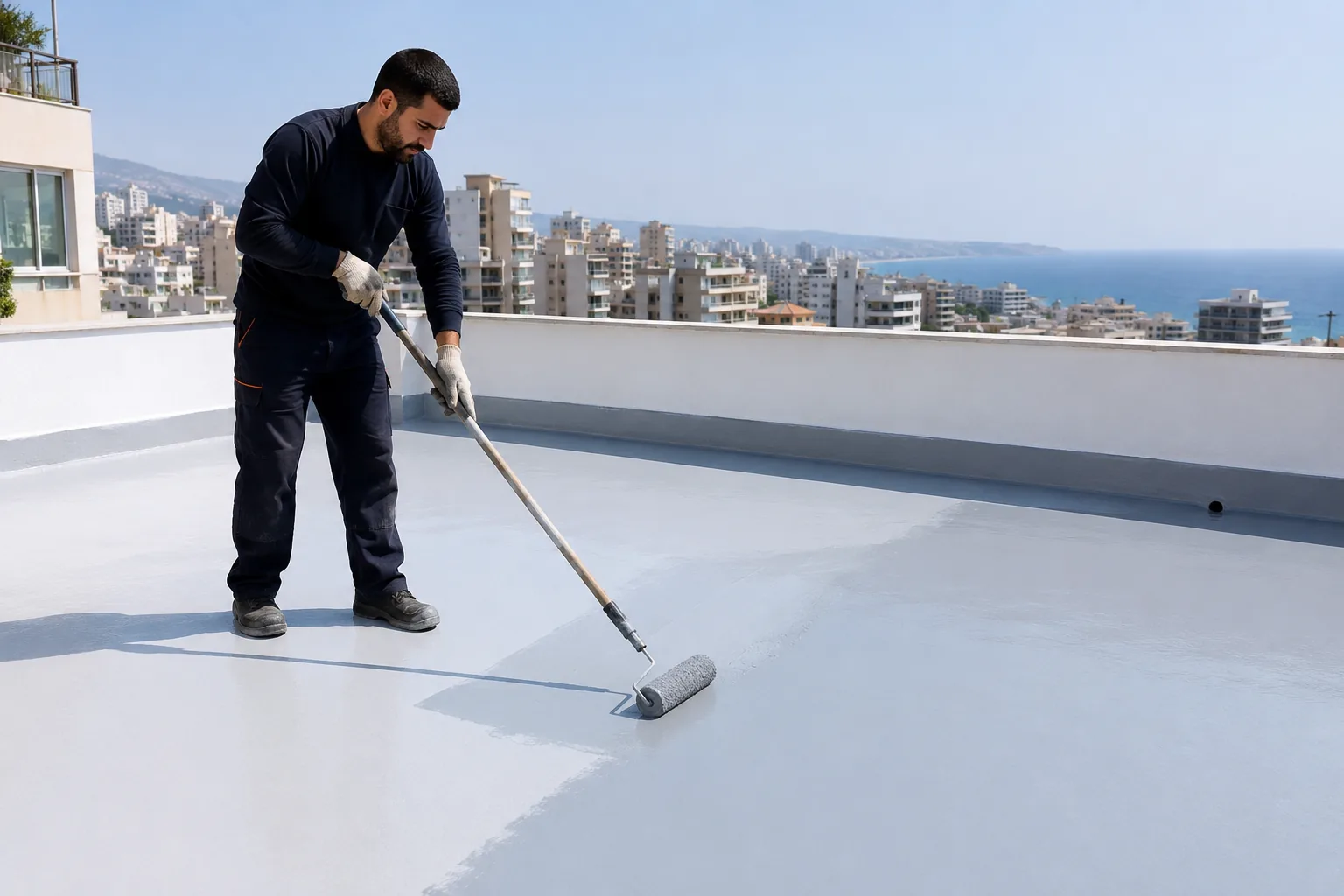
In wet areas the membrane must be continuous, turned up the walls, and detailed properly at drains and corners. Tiles and grout are not waterproof — the layer beneath them is.
- Laying over an uneven or unsound base
Screed must be level and solid. Large-format tiles laid over an uneven base end up with lippage, hollow spots, and eventually cracked tiles.
- Insufficient adhesive coverage
Dabs of adhesive at the corners leave voids. Those voids are where tiles crack under load and where water sits in a wet area. Full-bed or proper notched coverage is the standard.
- No movement joints
Floors expand. A large tiled area locked rigidly wall-to-wall will tent or crack somewhere — the only question is where.
This is the misconception behind most bathroom leaks we are called to. Grout is porous and tile joints move. If there is no membrane underneath, water reaches the slab and then the ceiling below, and by the time it shows, the tiling has to come up.
Layout decisions worth making early
- Set out from the most visible line. A good tiler plans cuts to fall where they are least seen, not wherever the first tile happened to land.
- Avoid slivers at the edges. Thin cut strips against a wall look like an accident. Adjusting the starting line prevents them.
- Align wall and floor joints where possible. It reads as deliberate and costs nothing but planning.
- Decide grout colour with the tile in hand. Grout changes the whole appearance. Matching hides the grid; contrasting emphasises it.
- Plan falls to drains before laying. A shower floor has to drain. That is set in the screed, not corrected afterwards.
- Order enough, from one batch. Shade varies between production batches, and a later top-up rarely matches.

What drives the cost of a tiling job
Quotes vary widely, and the variation is usually explainable. Rather than compare totals, compare what each one includes.
| Driver | Effect |
|---|---|
| Tile format and material | Large formats and natural stone need more skill, more time and more careful handling. |
| Substrate condition | A sound level slab is one job. Removing old tiles, levelling and re-screeding is another. |
| Cutting complexity | Bathrooms full of fixtures, niches and pipe penetrations take far longer per square metre than an open floor. |
| Waterproofing scope | Wet areas need membrane work, and it should appear as its own line item. |
| Pattern and setting out | Herringbone, diagonal and continuous-joint layouts add labour and waste. |
| Removal and disposal | Lifting old tiles and getting debris out of a Beirut building is real work. |
We survey, specify the substrate work honestly, and give you one fixed figure to approve. Numbers published before anyone has seen the floor are the ones that get revised.
How we quote it
For floors, wet areas, marble and stone work see our tiling and marble division, or the bathroom renovation guide for how tiling fits into the wider sequence.
Sometimes, if the existing tiles are sound, well bonded and the height change is acceptable at doors and fixtures. In wet areas it is usually the wrong call, because it leaves the old waterproofing buried and unverifiable.
Voids under the tile from insufficient adhesive coverage. They are the tiles that will crack first. A few are common; widespread hollowness is a workmanship problem.
Yes. It is porous and reacts to acids, so it needs sealing and appropriate cleaning products. In exchange, it can be re-polished rather than replaced.
Adhesive and grout both need curing time, and it varies by product and conditions. Rushing it is a common cause of movement in the first weeks.
Need it done, not just explained? Tiling and marble contractors in Beirut - Waterproofed first, measured and quoted in writing. WhatsApp us now
All articles · Book on WhatsApp: +961 76 480 946