No Hot Water? How to Diagnose an Electric Boiler
Need it done, not just explained? Licensed plumbers in Beirut - Open 24/7, written scope before we start. WhatsApp us now
The electric boiler is the workhorse of the Lebanese home, and it lives a hard life: hard water, power cuts, and years without anyone opening it. Almost every fault it develops announces itself first. Here is how to read the announcement.
- Scale is the root cause behind most Lebanese water heater failures.
- A leaking tank body cannot be repaired — that one is always replacement.
- Noise usually means sediment, not imminent failure.
- Descaling every couple of years is the cheapest maintenance in the house.
Read the symptom
| Symptom | Most likely cause | Repairable? |
|---|---|---|
| No hot water at all | Failed heating element, tripped thermal cut-out, or no power reaching the unit | Yes, usually straightforward |
| Water lukewarm, never hot | Thermostat drifted, or one element of a pair has failed | Yes |
| Hot water runs out very fast | Heavy scale reducing effective tank volume, or a dip-tube fault | Yes, with a full descale |
| Rumbling or popping while heating | Sediment layer on the tank floor boiling underneath | Yes, descale and flush |
| Water is rusty or brown | Internal corrosion, or a spent sacrificial anode | Sometimes — depends how far it has gone |
| Dripping from the pressure valve | Valve doing its job, or a failed valve | Yes, but find out which |
| Water pooling under the tank | Tank body has corroded through | No. Replace. |
| Trips the breaker when it heats | Element has failed to earth | Yes — element replacement, but do not reset repeatedly |
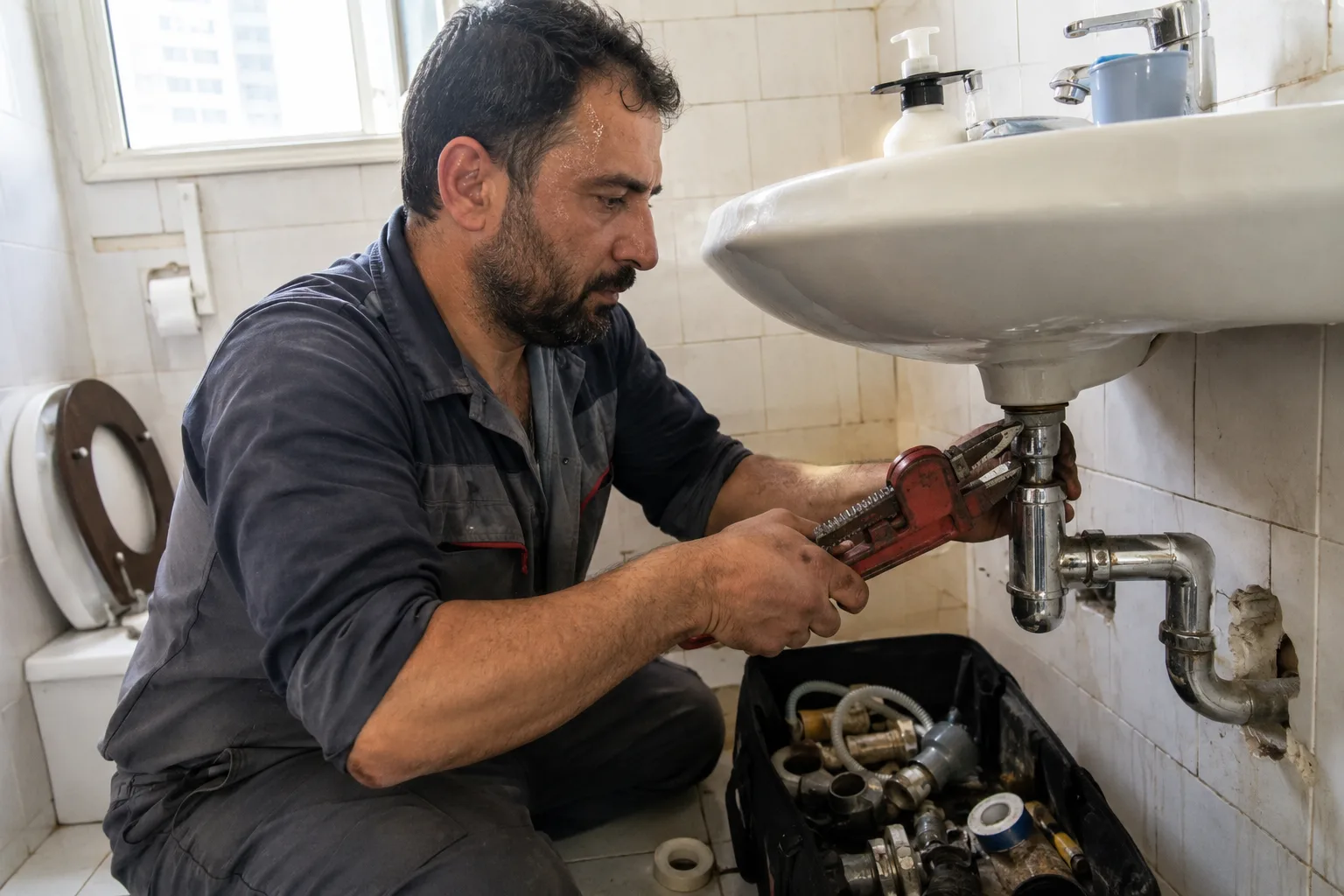
Why scale is the real enemy
Lebanese mains water is hard. Every time it is heated, calcium comes out of solution and settles — as a crust on the heating element and as a layer of sediment on the tank floor. Three things follow.
- The element insulates itself
A scaled element has to run hotter to push the same heat into the water, so it burns out years earlier than it should.
- The tank gets smaller
Sediment takes up volume. That is why a heater that used to give you two showers now gives you one.
- Running cost rises
Longer heating cycles mean more consumption, which matters most when you are on generator supply and billed by draw.
A descale and flush every two years, and an anode check while the unit is open, will typically double the working life of an electric boiler. It is unglamorous and it is the highest-return maintenance job in a Lebanese apartment.
What you can check safely yourself
- Is the breaker on? Boilers are often on a dedicated breaker that gets switched off during a cut and never switched back.
- Is the thermal cut-out tripped? Many units have a small reset button. One press is diagnostic. If it trips again, stop and call.
- Is the tank actually full? After a water outage, an air-locked heater will not heat properly. Run a hot tap until flow is steady.
- Is the leak from the tank or the fittings? Dry everything, put paper underneath, and look again in an hour. Fittings are a repair; the tank body is not.
Do not open the electrical cover with power on. Do not cap or plug a dripping pressure relief valve — it is the only thing standing between a pressurised tank and a rupture. Do not keep resetting a breaker that trips when the heater starts; that is an element failing to earth.
Repair or replace
The decision is simpler than people expect, because it hinges on one thing: is the tank sound?
| Situation | What we would do |
|---|---|
| Element or thermostat failed, tank sound | Repair. These are consumable parts on an otherwise healthy unit. |
| Heavy scale, tank sound | Descale and flush, replace the element if it is coated, check the anode. |
| Tank weeping or corroded through | Replace. There is no reliable repair for a corroded tank, and a delayed replacement usually means damage downstairs too. |
| Unit well past a decade, repeated faults | Replace, and take the opportunity to size it properly for how many people actually live there. |
| Renovating the bathroom anyway | Replace and reposition. Access matters more than people think at the next service. |
Sizing and placement, if you are replacing
Two mistakes repeat. The first is buying too small because it is cheaper, then living with cold showers for a decade. The second is installing it where nobody can service it — boxed into a ceiling void with no access hatch, or above a finished ceiling with no drip tray. Insist on an isolation valve, a serviceable access route, and somewhere for water to go if it ever leaks.
See our plumbing division for heater supply, installation and servicing, or the bathroom renovation guide if this is part of a larger job.
With regular descaling, comfortably over a decade. Without it, considerably less — scale and a spent anode are what shorten the life, not age itself.
Solar thermal works well on Lebanese roofs and cuts running cost sharply, but it needs roof access, structural clearance and an electric backup for winter. It is a good fit when you are already renovating.
Colder incoming water means longer heating cycles, which exposes a marginal element or a damp connection that survives the summer.
Often yes for priority repairs, depending on location and traffic. Replacements depend on getting the right unit, but we hold common sizes.
Need it done, not just explained? Licensed plumbers in Beirut - Open 24/7, written scope before we start. WhatsApp us now
All articles · Book on WhatsApp: +961 76 480 946