Generator Switchover and Surge Protection in Beirut
Need it done, not just explained? Certified electricians in Beirut - Open 24/7, all work to code. WhatsApp us now
Lebanese homes do not suffer from power cuts so much as from power changes. Every switchover between EDL and the building generator is an electrical event, and it is those events, repeated thousands of times a year, that kill fridges, pumps, compressors and electronics.
- Under-voltage damages motors more reliably than spikes do, and it never trips anything.
- Protection belongs at the distribution panel, where it covers every circuit.
- A plug-in strip protects only what is plugged into it, and only against surges.
- Earthing is missing or inadequate in a large share of older Beirut apartments.
What actually happens at switchover
When supply transfers, three things can go wrong in the space of a second or two, and each damages equipment differently.
- Voltage sag
The generator takes load and voltage drops. Motors respond by drawing more current to maintain torque, which means heat in the windings. This is the quiet killer.
- Voltage spike
Load sheds suddenly or supply returns, and voltage overshoots. Electronics — boards, drivers, chargers — take the damage here.
- Rapid cycling
Supply flickering on and off restarts compressors against pressure they should not start against, which is how a compressor fails at five years instead of fifteen.
Lights that visibly dim and recover, appliances that restart themselves, and a fridge that seems to run constantly are all signs of supply instability. People live with them for years. They are the warning that comes before the repair bill.
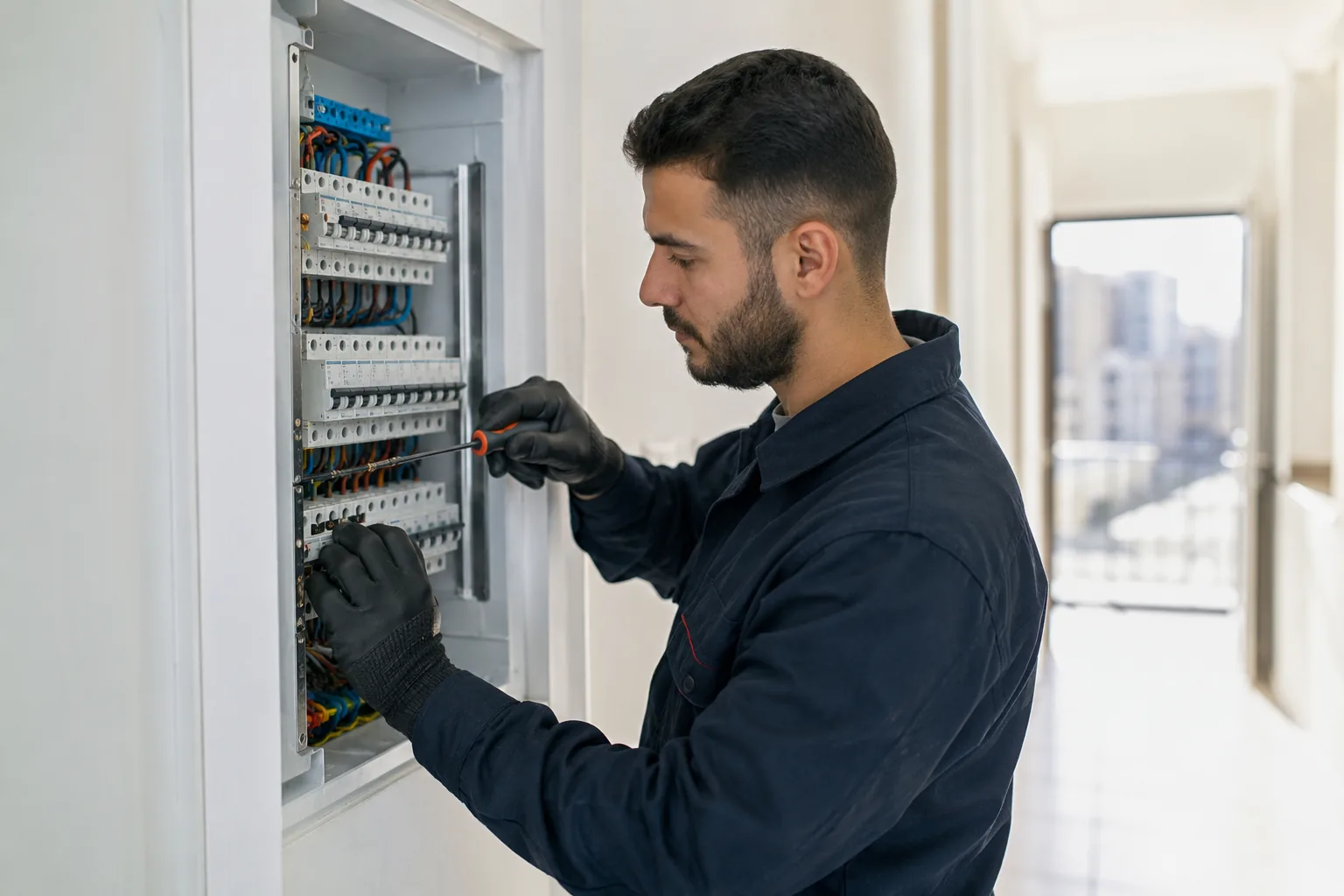
What protection actually does what
| Device | What it protects against | Where it goes |
|---|---|---|
| Surge protection device (SPD) | Voltage spikes and transients | At the distribution panel, protecting every circuit |
| Automatic voltage regulator / protector | Sustained over- and under-voltage | At the panel, or per-appliance for critical equipment |
| Residual current device (RCD) | Earth leakage — the fault that shocks people | At the panel, and mandatory in wet areas |
| Circuit breakers (MCB) | Overload and short circuit | One per circuit, correctly rated to the cable |
| Plug-in surge strip | Spikes only, on that one socket | Convenient, but not a substitute for panel protection |
| Online UPS | Everything, briefly, for one device | Routers, computers, medical or clinic equipment |
The most common misunderstanding we meet. A cheap strip clamps spikes. It does nothing about the sustained under-voltage that is actually cooking your fridge compressor, and it protects nothing that is hard-wired.
Earthing: the part nobody sees
A large number of older Beirut apartments have no functional earth. Without it, residual current devices cannot do their job, surge devices have nowhere to divert energy to, and a fault in an appliance can put the casing at mains voltage with no protection tripping. It is invisible, it is common, and it is the first thing we test on an inspection.
- Ask whether your apartment has a verified earth. "There is a green wire" is not the same as a tested earth path.
- Wet areas need residual current protection. Bathrooms, kitchens, water heaters, roof pumps, outdoor sockets.
- Metal-bodied appliances are the risk. Water heaters, washing machines and pumps are where earth faults actually appear.
- Test devices are meant to be tested. Press the test button on an RCD every few months. A device that never trips may be a device that cannot.
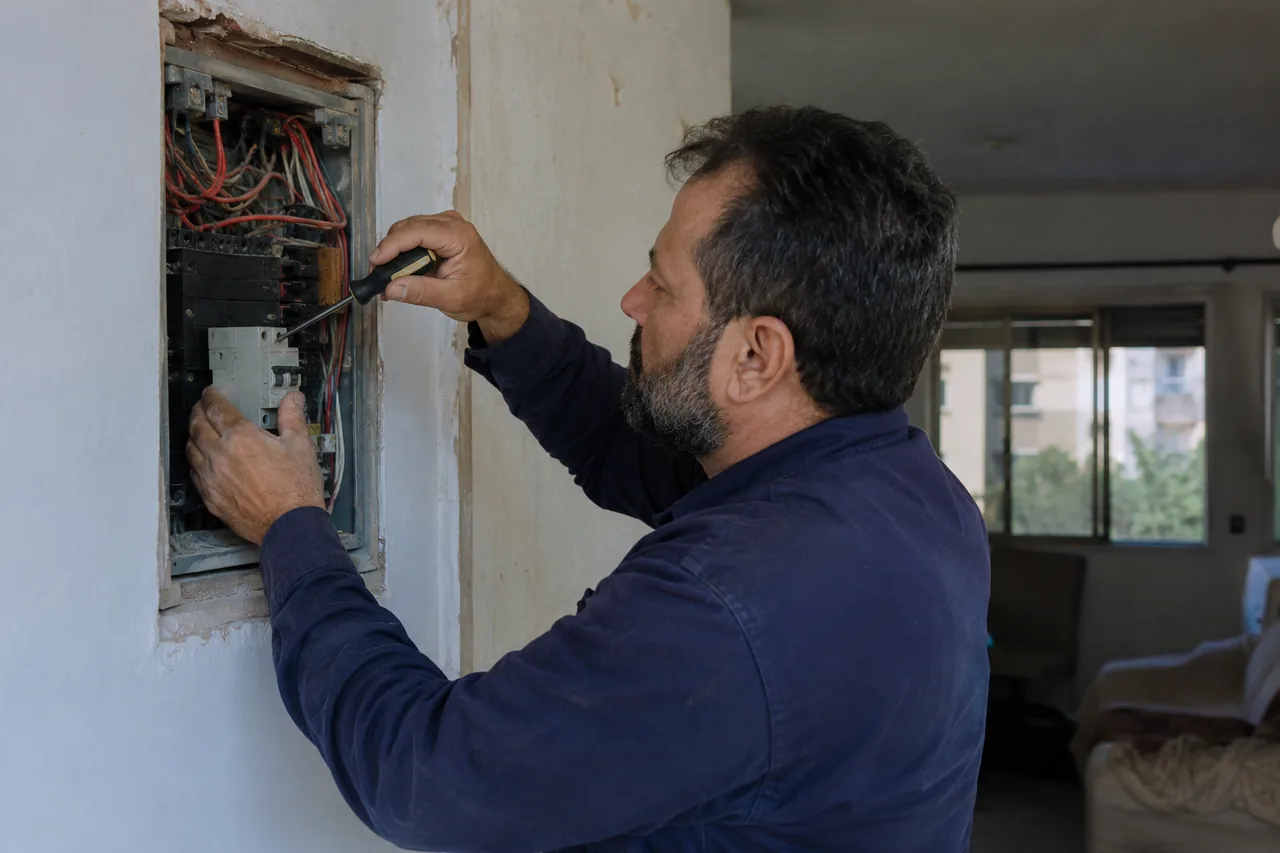
Generator-side issues that show up inside the apartment
Some of what people experience as apartment faults originate in the building's shared equipment, which is why a syndic-level fix sometimes solves everyone's problem at once.
- Worn changeover contacts. The most-cycled component in the building. Pitted contacts arc, heat, and eventually weld.
- Poor neutral bonding on generator supply. Produces flicker and erratic appliance behaviour across multiple apartments.
- Generator loaded beyond its rating. Voltage sags every time a large load starts anywhere in the building.
- No protection on the common feed. Every apartment inherits the same events.
If you manage a building, this is exactly the kind of scope we handle under a maintenance contract — common-area panels, changeover equipment, risers and protection, on a schedule.
Panel-level protection costs less than the appliances it saves, and it protects the circuits you cannot reach with a plug.
The economics
For inspections, panel upgrades, earthing and protection, see our electrical division. If your bill is the concern rather than the damage, read how to cut your generator bill.
Panel first, because it covers every circuit including hard-wired equipment. Add per-device protection afterwards for anything critical.
It removes the electrical cause. It does not stop mechanical wear, and it cannot help equipment that was already damaged before it was fitted.
In most cases yes. Protection devices are installed in the existing distribution board, provided there is space and a sound earth.
It needs testing, not looking at. An electrician measures the earth path — the presence of a green conductor proves nothing on its own.
Need it done, not just explained? Certified electricians in Beirut - Open 24/7, all work to code. WhatsApp us now
All articles · Book on WhatsApp: +961 76 480 946